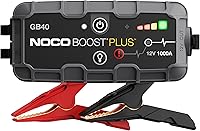
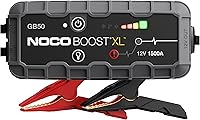
NOCO GB70 vs GBX75: Which Is Better? (October 2026)
For the NOCO GB70 vs GBX75, choose the GB70 for more stated starts per charge or the GBX75 for faster charging and a higher engine rating. Both are 12V lithium jump starters with spark-proof and reverse polarity protection.
On this page (8 sections)
- NOCO GB70 vs GBX75: what is the main difference?
- Which model fits your engine?
- Which one suits frequent use?
- How do charging and power bank features compare?
- Are the safety features different?
- How should you set up and care for either jump starter?
- What mistakes should you avoid?
- NOCO GB70 vs GBX75: which should you choose?
For the NOCO GB70 vs GBX75, choose the GB70 for more stated starts per charge or the GBX75 for faster charging and a higher engine rating. Both are 12V lithium jump starters with spark-proof and reverse polarity protection.
The GB70 is rated at 2000 A and up to 40 starts per charge. The GBX75 is rated at 2500 A and up to 12 starts per charge, and it recharges faster when you use a 60W USB-C Power Delivery charger.


NOCO GB70 vs GBX75: what is the main difference?
The GBX75 has higher peak power and a higher engine rating, while the GB70 has more stated starts per charge. That tradeoff matters most if you jump-start vehicles regularly, need to recharge quickly, or have an engine near the upper limit of either model.
| Feature | NOCO Boost GB70 | NOCO Boost GBX75 |
|---|---|---|
| Peak power | 2000 A | 2500 A |
| Gas engine rating | Up to 8.0L | Up to 8.5L |
| Diesel engine rating | Up to 6.0L | Up to 6.5L |
| Starts per charge | Up to 40 | Up to 12 |
| Recharge time | 6 hours | 1.8 hours with 60W USB-C Power Delivery |
| USB charging | Power bank for smartphones, tablets and more | 60W USB-C Power Delivery input and output |
| Flashlight | 400 lumens, 7 modes | 400 lumens, 7 modes |
| Weight | 5 lb | 5 lb |
| Housing | IP65-rated with rubberized over-molding | No housing rating stated |
The GBX75 suits drivers who value output, shorter charging time and USB-C power for larger devices. The GB70 makes more sense if its engine rating covers your vehicle and you prefer a higher stated number of starts before recharging.
Both offer a flashlight with 7 modes, including SOS and strobe. Their stated engine ratings are guidelines for matching a jump starter to a vehicle, not a guarantee that every low battery will start in every condition.
Which model fits your engine?
The GB70 is rated for engines up to 8.0L gas and 6.0L diesel; the GBX75 covers up to 8.5L gas and 6.5L diesel. Check your engine size and fuel type first, then compare charging and power-bank needs.
If your engine falls within both ratings, either model may fit on engine size alone. The GBX75 offers a little more room above the GB70's limits, but a higher rating isn't a reason to pay for capacity you don't need.
For a truck or SUV with an engine within the GB70's rating, choose based on how you'll keep the unit ready. The GB70 is a sensible fit if you want its higher stated starts-per-charge figure and don't need fast USB-C charging.
Is the GBX75 a better fit for a larger engine?
The GBX75 is the better match when your gas engine is over 8.0L through 8.5L, or your diesel is over 6.0L through 6.5L. It also has higher peak power than the GB70.
If your vehicle exceeds the GBX75's rating, neither of these is the right fit based on the stated engine limits. The NOCO GB150 is rated for up to 9.0L gas and 7.0L diesel engines, with 3000 A peak power.
An engine rating doesn't account for every cause of a no-start. A battery with a fault or a vehicle with a separate starting problem may need diagnosis or repair rather than a more powerful booster.
When is the GB70's engine rating enough?
The GB70's rating covers engines up to 8.0L gas and 6.0L diesel. If your vehicle fits those limits and you don't need the GBX75's faster charging, the GB70's extra stated starts per charge can be more useful than its sibling's higher output.
Compare the figure with your owner's manual or engine information before you buy. Don't choose from the vehicle's model name alone, since engine size and fuel type can vary within a model line.
For a broader look at products matched to truck and SUV needs, see our guide to jump starters for V8 trucks and SUVs. It can help you compare engine fit before choosing a specific model.
Which one suits frequent use?
The GB70 is rated for up to 40 starts per charge, compared with up to 12 for the GBX75. That makes the GB70 the clearer choice if you expect to use a booster repeatedly between charges.
Those figures describe stated maximum starts, not a promise for every situation. Battery condition, engine requirements and how the unit is used can affect results, so recharge the booster after use and follow its instructions.
The GBX75 trades fewer stated starts per charge for quicker recharging with the proper 60W USB-C Power Delivery charger. If you can recharge between uses and value a short turnaround, that can matter more than the maximum starts figure.
For a household vehicle that rarely needs a jump, either model may be more capacity than you need. The better choice is the one whose engine rating fits and that you'll keep charged and accessible.
How do charging and power bank features compare?
Choose the GBX75 for 60W USB-C Power Delivery input and output; choose the GB70 if you only need a power bank for phones, tablets and similar devices. The GBX75 can charge phones, tablets, laptops and other USB-C devices.
With a 60W USB-C Power Delivery charger, the GBX75 recharges in 1.8 hours. It can also gain enough charge for a jump start in 5 minutes, even when completely depleted.
That speed depends on using the right charger. Standard low-wattage phone chargers take significantly longer, so check the charger and cable you plan to keep with the unit instead of assuming any USB-C adapter will deliver the same result.
The GB70 takes 6 hours to recharge and provides power for smartphones, tablets and more. If you don't need laptop charging or fast replenishment, its simpler charging profile may be enough.
Think about where you'll recharge it. A unit stored in a car, garage or work vehicle is most useful when you have a practical way to top it up before an emergency.
Are the safety features different?
Both models have spark-proof and reverse polarity protection; the GBX75 also has a manual override for a battery below 3V. Protection features can help reduce connection mistakes, but you still need to follow the correct connection order and vehicle instructions.
The GBX75's UltraSafe 2.0 includes enhanced thermal efficiency and power management. If a vehicle battery is below 3V, its safety sensors may not detect it; holding the Manual Override button for 3 seconds forces the jump-start function.
Use manual override only as directed, and take extra care to identify the correct terminals before connecting clamps. If the battery is damaged, leaking or swollen, don't try to force a start with a booster.
Read our step-by-step guide on how to use a car jump starter before you need one. Reviewing the connection and startup sequence in advance makes roadside use easier to manage.
How should you set up and care for either jump starter?
Read the instructions, charge the unit fully, and learn where its clamps and controls are before storing it in your vehicle. A jump starter that's unfamiliar or depleted can be difficult to use when you're under pressure.
For the GBX75, pair it with a 60W USB-C Power Delivery charger if you want its stated 1.8-hour recharge time. Keep the charging cable and clamps together in the storage bag so you can find them when needed.
Before a jump, park safely, switch off the vehicle, and check the vehicle manual for its battery connection points and any special procedure. Attach the clamps as directed, confirm a secure connection, and only then use the starter according to its instructions.
After a successful start, disconnect the clamps in the instructed order and return them to storage. Recharge the jump starter after use, then check its charge periodically so it is ready the next time you need it.
The GB70 has an IP65-rated housing with rubberized over-molding. That protection doesn't remove the need to keep the charging ports and clamps clean and dry before use.
What mistakes should you avoid?
Don't choose by peak amps alone, assume a fast recharge works with any charger, or ignore the engine rating. Those shortcuts can leave you with a model that doesn't fit your vehicle or isn't ready when you need it.
- Don't mix up peak power and engine fit. Compare your engine size and fuel type with the rated limits.
- Don't treat maximum starts as a guarantee. The GB70's higher figure is a stated rating, and actual results can vary.
- Don't expect the GBX75's fastest recharge from a low-wattage charger. Its 1.8-hour figure depends on a 60W USB-C Power Delivery charger.
- Don't use manual override casually. It's intended for the GBX75's low-voltage detection issue and requires following the instructions.
- Don't store the unit without a recharge plan. Make topping it up part of your routine, especially after use.
If cold weather is part of your concern, our guide to a winter car emergency kit covers supplies beyond a jump starter. For battery care ideas, see how to protect a car battery in winter.
NOCO GB70 vs GBX75: which should you choose?
Choose the GB70 if its engine rating fits and you value up to 40 stated starts per charge; choose the GBX75 if you need the higher rating, faster recharge or 60W USB-C output. Both weigh 5 lb, so engine fit and charging needs should guide the decision.
The GB70 is the practical pick for drivers who want more starts between charges, have no need to power a laptop, and can accept a 6-hour recharge. Its IP65-rated housing is another useful feature for a unit carried in a vehicle or emergency kit.
The GBX75 suits drivers with an engine closer to the upper limit, people who want to recharge quickly with a compatible 60W charger, and anyone who expects to use the power bank for larger USB-C devices. Skip it if you won't have the right charger and don't need its higher output.
If your engine is above both models' ratings, consider the GB150, which is rated for up to 9.0L gas and 7.0L diesel engines. For a wider comparison of the lineup, see our guide to the best NOCO jump starters by model.
For this NOCO GB70 vs GBX75 choice, start with your engine size, then decide whether more starts per charge or faster recharging matters more in your routine.
Frequently asked questions
Is the NOCO GB70 or GBX75 more powerful?
The GBX75 has the higher peak power rating at 2500 A, compared with 2000 A for the GB70. Its engine rating is also higher: up to 8.5L gas and 6.5L diesel, versus 8.0L gas and 6.0L diesel for the GB70.
Match the rating to your vehicle's engine size and fuel type.
Which NOCO jump starter recharges faster?
The GBX75 recharges in 1.8 hours with a 60W USB-C Power Delivery charger, while the GB70 takes 6 hours. The GBX75 can gain enough power for a jump start in 5 minutes, even from a completely depleted battery.
Standard low-wattage phone chargers take significantly longer with the GBX75.
Can the GBX75 start a completely drained battery?
The GBX75 has a manual override for a vehicle battery below 3V, when its safety sensors may not detect the battery. Press and hold the Manual Override button for 3 seconds to force the jump-start function.
Use the override as directed in the product instructions and vehicle manual.
Should I choose the GB150 instead?
Consider the GB150 if your engine is beyond the GB70 or GBX75 ratings. It's rated for up to 9.0L gas and 7.0L diesel engines, with 3000 A peak power and up to 80 starts per charge.
At 7.5 lb, it weighs more than either the GB70 or GBX75.