What to Keep in a Winter Car Emergency Kit
A useful winter car emergency kit covers warmth, visibility, traction, communication, and a dead battery. Choose supplies for your route and passengers, keep them secured and reachable, and check them before winter trips.
On this page (8 sections)
- What belongs in a winter car emergency kit?
- How do you choose battery gear for winter?
- How do you stay warm while waiting for help?
- How can you stay visible in snow or darkness?
- What helps if your car gets stuck in snow?
- What food, water, and health supplies should you carry?
- How should you set up and care for the kit?
- Which winter car emergency kit setup fits your needs?
A winter car emergency kit should help you stay warm, visible, connected, and able to handle a dead battery or stuck tires. Build it around your route, the weather you expect, and the people who ride with you.
Keep supplies in a secured tote that you can reach without unloading the car. A kit is useful only if the essentials are easy to find and in working order when you need them.
What belongs in a winter car emergency kit?
A practical winter car emergency kit starts with warmth, visibility, traction, communication, and basic first aid. Add water, shelf-stable snacks, a small shovel, and a safe way to address a weak battery.
Use this checklist as a starting point:
- Warm hat, gloves, socks, and extra layers for each regular passenger
- Blanket or sleeping bag
- Flashlight or headlamp with spare batteries
- Reflective vest and warning triangles
- Phone cable and charged power bank
- First-aid kit and essential personal medication
- Water and nonperishable snacks
- Small snow shovel and traction material such as sand
- Ice scraper and snow brush
- Jumper cables or a portable jump starter
- Basic vehicle tools and a tire pressure gauge
Put items you may need while seated, such as a blanket, flashlight, and phone charger, near the top of the tote or in the cabin. Secure heavier tools so they can't slide forward during a sudden stop.
For short city trips, focus on visibility, warmth, a charged phone, and battery help. Rural drivers and people who travel through severe weather should also carry traction supplies, a shovel, extra food and water, and enough warm layers for every passenger.
Review the vehicle manual before attempting repairs or adding equipment. For cold-weather battery preparation, see how to protect a car battery in winter.
How do you choose battery gear for winter?
Choose a jump starter if you need a self-contained way to start a 12-volt vehicle; choose jumper cables if you can rely on another vehicle and know how to connect them safely. A charger is for planned battery care where you can reach an outlet.
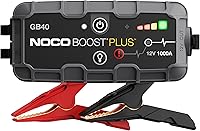
The NOCO Boost GB40 suits drivers who want a compact emergency unit for a glove box or kit. It is rated for gasoline engines up to 6.0 liters and diesel engines up to 3.0 liters, and has spark-proof and reverse-polarity protection.
Skip it if your vehicle is outside those engine limits or you want an air compressor built into the same unit.
The GB40 also has a 100-lumen flashlight with 7 modes, including SOS and strobe, and a power bank for phones and tablets. NOCO says it recharges in 3 hours, which makes it practical to top up before a winter trip.
The Gooloo A3 fits drivers who want one unit for starting help and tire inflation. It combines a jump starter with a 150 PSI air compressor, flashlight, USB charging, and a digital pressure gauge; skip it if you only need a simple jump starter and prefer fewer functions to manage.
The A3's operating and storage range is -4°F to 140°F, while its charging range is 14°F to 113°F. Check that distinction before charging it in cold conditions, and recharge it at least every 3 months during long-term storage.
Cartman 4 Gauge Jumper Cables suit drivers who often travel with another vehicle or can safely get help from one. Their 20 ft length can reach batteries on different sides of a vehicle, and they fit top-post and side-post batteries.
Skip cables if you need to start your car without another vehicle.
The cables are rated for use down to -13°F. Learn the connection order and follow both vehicles' manuals before using them in the cold.
The NOCO GENIUS5 is for planned charging and battery maintenance at home or another location with an AC outlet. It works with 6-volt and 12-volt lead-acid and LiFePO4 batteries, and has a temperature sensor that adjusts charging to ambient conditions.
Skip it as a roadside starting solution because it needs AC power.
For more guidance, compare how to use a car jump starter with how to jump start a car without another car.
How do you stay warm while waiting for help?
Keep dry layers and a blanket in the passenger area so you can reach them without leaving the vehicle. A warm hat, gloves, socks, and coat help each passenger stay covered during a delay.
Call roadside assistance or emergency services when needed and share your location. Stay inside if wind, snow, traffic, or poor visibility makes leaving unsafe.
Before running the engine for heat, check that the exhaust pipe is clear of snow. Keep a window slightly open and run the engine only as needed; follow local emergency guidance and never sleep with the engine running.
Hand warmers can be a useful extra, but they don't replace warm clothing or a blanket. Follow their package directions and keep them dry.
How can you stay visible in snow or darkness?
Keep a flashlight and reflective warning gear in the cabin, where you can reach them quickly. A vest helps drivers see you outside the car, while warning triangles can alert approaching traffic when it is safe to place them.
Turn on hazard lights when stopped in a risky location. Don't walk into traffic or stand behind the car to place equipment if visibility or road conditions make that unsafe.
The GB40's built-in flashlight can serve as a backup light for roadside tasks. Learn its controls before travel, and carry a separate flashlight or headlamp if other passengers may need their own light.
What helps if your car gets stuck in snow?
A small shovel and traction material can help clear packed snow and improve grip around the tires. Use them only when you can work away from moving traffic and without putting yourself at risk.
Clear snow from around the tires and exhaust pipe before trying to move or run the engine. Add sand or another suitable traction material near the drive wheels, then follow the owner's manual for safe recovery steps.
Avoid spinning the tires for long periods, because that can dig the car in deeper. If the vehicle won't move with a small amount of effort, call for assistance.
What food, water, and health supplies should you carry?
Pack water, shelf-stable snacks, a first-aid kit, and essential personal medication. Choose supplies that can remain in the car through expected temperature changes, and check for damage or expiration dates.
Store medication according to its packaging directions. If a passenger has specific health or mobility needs, plan supplies around that person and keep them easy to reach.
A power bank can provide backup phone charging when the car's electrical system is unavailable. The GB40 and A3 both support USB device charging, so choose one only if its other features also fit your needs.
How should you set up and care for the kit?
Secure the kit so it won't shift while driving, and keep the most useful items within reach. Before winter trips, check the flashlight, phone cable, food, water, clothing, and any battery equipment.
Fully charge the A3 before first use and recharge it at least every 3 months during long-term storage. For the GB40, follow its instructions and recharge it before a trip; NOCO says it takes 3 hours to recharge.
Check the temperature limits before charging or storing powered equipment. Keep devices away from prolonged heat, moisture, and direct sunlight, and replace supplies that have been used, damaged, or expired.
Common mistakes are burying the flashlight under luggage, carrying cables without knowing how to use them, and assuming a jump starter is ready because it was charged months ago. Another is treating a household charger as roadside help: it needs an outlet, while a jump starter is meant for starting a vehicle away from one.
Which winter car emergency kit setup fits your needs?
For a winter car emergency kit, prioritize warmth, visibility, communication, traction, and a battery plan, then add supplies for your route and passengers. A short-trip driver can keep the setup compact, while remote or severe-weather travel calls for extra layers, food, water, and recovery gear.
Pick the GB40 if a compact jump starter with a flashlight and phone charging fits your vehicle. Choose the A3 if you also want an air compressor, or the Cartman cables if you can safely depend on another vehicle.
Add the GENIUS5 for battery maintenance where you have an outlet, and see what to try when a car won't start in cold weather for other causes and next steps.
Frequently asked questions
What should be in a winter car emergency kit?
Pack warm clothing or blankets, gloves, a flashlight, reflective warning gear, a phone charging option, water, snacks, a first-aid kit, a small shovel, and traction material such as sand. Add jumper cables or a charged jump starter, then adjust the kit for your route, passengers, and local weather.
Should I keep a jump starter in my winter car kit?
A charged jump starter can help when a 12-volt battery won't start the car and another vehicle isn't available. Check its instructions for temperature limits and charging intervals, keep its cables with it, and learn the connection steps before you need them in the dark or cold.
How often should I check a winter emergency kit?
Check the kit before winter travel and periodically during the season. Confirm that the jump starter is charged, batteries and lights work, food and water are usable, clothing still fits the passengers, and nothing has leaked or shifted where it could interfere with driving.
What should I do if my car gets stuck in snow?
Move as far from traffic as you safely can, turn on hazard lights, and call for help if needed. Stay with the vehicle when conditions outside are unsafe, keep the exhaust pipe clear of snow before running the engine, and use warm clothing while you wait.