Car Won't Start in Cold Weather? What to Try First
If your car won't start in cold weather, check the battery and its connections first. Turn off accessories, note what happens when you try to start it, and choose a jump or recharge only if the battery and setup are safe.
On this page (9 sections)
- What should you check first when a car won't start in cold weather?
- Could the battery be why your car won't start in cold weather?
- How do you choose a jump starter for a cold-weather no-start?
- Is it safe to jump-start the car in freezing weather?
- What if the engine cranks but won't start?
- When should you stop trying and call for help?
- Should you charge the battery instead of jumping it?
- What mistakes can make a cold-weather no-start worse?
- What should you do after the car starts?
If your car won't start in cold weather, check the battery and its connections first. Turn off accessories, notice whether the engine clicks, cranks slowly, or stays silent, and avoid repeated long attempts.
Cold conditions can make a weak battery struggle to start the engine. The sounds and dashboard lights help you decide what to check next, but they don't diagnose every cause.
What should you check first when a car won't start in cold weather?
Turn off the lights, heater, radio, and other accessories, then look for obvious battery problems. Don't touch a battery that is cracked, leaking, swollen, or possibly frozen.
Check whether the battery cables appear loose or badly corroded. Don't remove or adjust cables unless you know how to do it safely and your vehicle manual allows it.
Notice what happens when you try to start the car:
- Rapid clicking or a slow crank: the battery may be weak, or a connection may be poor.
- One click and no crank: the battery, connections, starter, or another part may be at fault.
- No lights or sound: a discharged battery or loose connection is possible.
- The engine turns over but doesn't start: fuel, ignition, or another problem may be involved.
These clues are not a diagnosis. If the battery looks damaged, you smell fuel, see smoke, or hear grinding, stop and seek roadside help.
Could the battery be why your car won't start in cold weather?
Yes, a weak battery is a common cause of cold-weather starting trouble. Cold conditions can make it harder for a battery to provide the power the starter needs.
A battery that was already weak, old, or left discharged may struggle more on a cold morning. Accessories left on can also drain it, so switch them off before trying again.
For ways to reduce winter starting trouble, read how to protect a car battery in winter. For a broader checklist for cold-weather breakdowns, see the winter car emergency kit guide.
How do you choose a jump starter for a cold-weather no-start?
Match the jump starter to your vehicle and the conditions where you expect to use it. Check that it supports your vehicle's 12V system and engine size, then consider whether compact storage or cold-temperature features matter more.
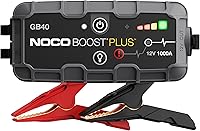
For a smaller emergency kit and compatible passenger car, the NOCO Boost GB40 is rated for engines up to 6.0L gas and 3.0L diesel. It weighs about 2.4 lb and includes spark-proof and reverse-polarity protection, plus a flashlight and a power bank.
The GB40 suits drivers who want a portable unit for a glovebox or emergency kit. Skip it if your vehicle's engine is outside its stated limits or if you need a dedicated cold-weather preheat feature.
For a larger engine or severe cold, the GOOLOO GT4000 Arctic offers 4000A peak current, supports engines up to 12L gas and 10L diesel, and has battery preheat technology with a stated operating range from -40°F to 140°F. Its 100W car charger and carrying bag are useful if you want a kit that can recharge in the vehicle.
Choose the GT4000 Arctic if you want the preheat feature or need its higher stated engine limits. Skip the larger feature set if a compact glovebox unit is a better fit and you don't need those capabilities.
A jump starter won't fix every no-start. If you want help comparing the basic options, see car jump starters: what to know before you buy.
Is it safe to jump-start the car in freezing weather?
Jump-start only if the battery appears intact and you can follow the vehicle and equipment instructions. Don't connect cables to a battery that is cracked, leaking, swollen, or frozen.
Use the correct connection points and keep clamps clear of moving parts. Vehicle layouts and safe connection points differ, so follow your car's manual and the jump starter's instructions in order.
For a step-by-step connection process, follow how to use a car jump starter. If a jump doesn't work, can a jump starter start a completely dead battery? explains why a jump may not be enough.
What if the engine cranks but won't start?
If the engine cranks at its usual speed but doesn't catch, the problem may not be the battery. Fuel, ignition, or another system may need attention.
Check that you have fuel and that the car is in Park or Neutral, as appropriate. If the engine continues to crank without starting, avoid repeated attempts and contact roadside assistance or a mechanic.
Don't assume a jump will solve the issue just because the weather is cold. A jump starter supplies power for a start attempt; it doesn't repair the engine or fuel system.
When should you stop trying and call for help?
Stop and get help if you see battery damage, smell fuel, notice smoke, or hear grinding. A jump is also a poor next step if you can't identify safe connection points.
Call roadside assistance if the car is in an unsafe location, you lack suitable equipment, or a jump attempt doesn't help. If the engine starts but the battery warning light stays on, arrange a prompt inspection rather than relying on another start.
Keep warm while you wait, stay clear of traffic, and use hazard lights when safe. The winter car emergency kit guide covers supplies to keep in the vehicle.
Should you charge the battery instead of jumping it?
Use a charger for a battery that needs a slower recharge at home; use a jump starter for a start attempt away from an outlet. Follow the battery and charger instructions, and charge only in a suitable location.
The NOCO GENIUS5 is a 5A smart charger for compatible 6V and 12V lead-acid and LiFePO4 batteries. Its temperature sensor adjusts charging for ambient conditions, and it can also maintain a battery between drives.
Choose the GENIUS5 if you have a suitable place to charge and want a charger that can also maintain the battery. Skip it as an immediate roadside solution: it needs a power source and is not a jump starter.
A charger won't make a damaged battery safe to use. If the battery repeatedly loses charge or the car won't start again after a jump, have the battery and charging system checked.
What mistakes can make a cold-weather no-start worse?
Avoid repeated long start attempts, unsafe jump connections, and assuming a successful jump means the battery is healthy. Each can leave you with less power or a new safety problem.
Don't connect equipment to a damaged or frozen battery. Don't guess at connection points, and don't keep trying if you smell fuel, see smoke, or hear grinding.
A jump can get a compatible car started, but it doesn't show why the battery ran down. If the problem returns, arrange an inspection instead of depending on another jump.
What should you do after the car starts?
Let the car run only as the vehicle manual recommends, then arrange a battery check if the starting trouble returns. A successful jump doesn't confirm that the battery is healthy.
Keep a jump starter charged if you carry one, and check its charge before cold weather arrives. If you rely on a charger at home, use it according to its instructions and confirm it suits your battery type.
When your car won't start in cold weather, consider a jump for a likely battery issue only when the battery and connection points are safe. Pick the GB40 for compact storage, the GT4000 Arctic for its cold-start preheat and higher stated engine limits, or the GENIUS5 for charging and maintenance at home; call for help when warning signs appear or the cause isn't clear.
Frequently asked questions
Why won't my car start when it's cold?
A weak or discharged battery is a common reason a car won't start in cold weather. Cold conditions make starting harder.
A click, slow crank, or dark dashboard can point to a battery or connection issue, but doesn't prove the cause.
A mechanic can check for other faults.
Should I keep trying to start my car in cold weather?
No. Repeated long attempts can drain the battery further and strain the starter.
Try one short attempt, then pause.
Check the dashboard, battery connections, and fuel level.
Stop if you smell fuel, see smoke, or hear an unusual grinding sound.
Can I jump-start a car in freezing weather?
Often, but first check that the battery case isn't cracked, leaking, or frozen. Follow the vehicle and jump-starter instructions.
Don't connect a damaged battery or exposed cables.
Use roadside help or a mechanic if you aren't sure the setup is safe.
Will a jump starter work in very cold weather?
It depends on the jump starter's temperature guidance and charge level, as well as the battery's condition. Keep the unit charged and follow its instructions.
A jump starter cannot repair a failed battery or a problem with the starter, fuel, or ignition system.