How to Jump Start a Car Without Another Car
You can jump start a car without another car with a charged portable jump starter made for your vehicle's 12V battery. Follow its instructions, connect the clamps in the marked order, and try to start the engine.
On this page (7 sections)
- What do you need to jump start a car without another car?
- How do you connect a portable jump starter?
- How do you start the car and remove the clamps?
- What if the car still won't start?
- Can you use a jump starter in cold weather?
- Which jump starter should you choose?
- How can you prepare before the next dead battery?
You can jump start a car without another car by using a charged portable jump starter suited to your vehicle's 12V battery. Connect its clamps as the unit and vehicle manuals direct, make one starting attempt, then disconnect in the instructed order.
A portable unit replaces the donor vehicle and jumper cables. It doesn't repair a failed battery, alternator, starter, or other engine problem, so stop if anything looks damaged or the car still won't start.
What do you need to jump start a car without another car?
You need a 12V jump starter with enough capacity for your vehicle, its clamps, and access to the battery or approved jump points. Check your owner's manual for the battery location, terminal markings, grounding point, and any special jump-start procedure.
Park safely, switch off the ignition and accessories, and set the parking brake. Keep the jump starter and cables away from moving parts, heat, and standing water.
Charge the unit before you need it and inspect its clamps and cables for damage. Our guide to what a jump starter is and whether you need one explains the difference between a portable starter and other battery equipment.
How do you connect a portable jump starter?
Connect the clamps with the vehicle off, using the exact order and connection points in both manuals. The steps below are a general guide; the vehicle's instructions take priority if they differ.
- Find the battery or approved jump-start points.
- Check the positive and negative markings.
- Attach the red clamp to the positive point.
- Attach the black clamp to the negative point or the manual's approved ground.
- Turn on the jump starter if its instructions require it.
Keep the clamp jaws separated while connecting them. Don't attach a clamp to a painted, moving, or uncertain surface.
Some jump starters use indicator lights, screens, or a safety switch. Read what those signals mean before continuing; don't force a connection or bypass a warning.
How do you start the car and remove the clamps?
Once the unit indicates it's ready, try to start the car as directed by the manuals. If the engine doesn't turn over, stop and check the connection and any warning before deciding whether another attempt is allowed.
After the engine starts, disconnect the clamps in the order your jump starter's instructions specify. Keep them apart as you remove them, then switch off and store the unit as directed.
The step-by-step guide to using a car jump starter covers the connection and removal process in more detail. For advice on connection time, see how long to leave a jump starter connected.
Its screen displays operating status, and it has a one-touch booster function for low-voltage starting. The instructions warn against reversing clamp polarity, so check the marked terminals before connecting.
What if the car still won't start?
If the engine won't start, stop repeated attempts and check the basics: charge level, clamp placement, and any error message. Look for a loose or corroded connection only if you can inspect it safely.
A jump starter may not work if the battery is damaged or the problem is elsewhere in the starting or charging system. Don't continue if the battery is cracked, leaking, swollen, unusually hot, or giving off a strong odor.
A car that starts and then stalls, or won't restart later, needs more than another jump attempt. Read whether a jump starter can start a completely dead battery and arrange professional help if the cause is unclear.
Its 2000A rating and stated engine range of up to 8.5L gas and 6.0L diesel may suit vehicles that need more capacity than a smaller unit. Check your vehicle's requirements and the Alpha85 manual before use.
Can you use a jump starter in cold weather?
You can use a portable jump starter in cold weather only within its stated operating conditions. Cold can also make a weak car battery harder to start, so confirm the unit is charged and follow its storage and use instructions.
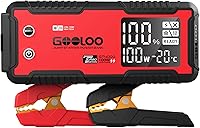
The Gooloo A3 has a stated operating and storage range of -4°F to 140°F, with a charging range of 14°F to 113°F. Avoid charging it outside that stated charging range.
The A3 is rated for gas engines up to 9.0L and diesel engines up to 6.5L. GOOLOO recommends recharging it at least every 3 months during long-term storage.
If cold weather is the reason your car won't start, follow what to try first when a car won't start in cold weather. Don't assume a jump will fix a battery that's frozen or visibly damaged.
Which jump starter should you choose?
Choose a unit whose voltage and stated engine range fit your vehicle, then consider the features you'll use. A screen can show status or errors, while a compact design may be easier to keep in a glovebox.
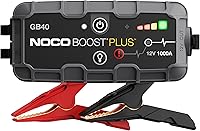
The NOCO Boost GB40 is rated for up to 6.0L gas and 3.0L diesel engines. The Wolfbox 4000A is rated for gas and diesel engines under 10L, while the Hulkman Alpha85 is rated for up to 8.5L gas and 6.0L diesel.
The Gooloo A3 also includes an air compressor, which can be useful if you want one device for starting and tire inflation. Compare its extra functions with your needs, and read whether jump starters are worth it before buying.
How can you prepare before the next dead battery?
Keep the jump starter charged, accessible, and within its care instructions. Check it periodically, especially if it has been stored for months or exposed to temperature extremes.
Before driving, learn where your vehicle's battery or jump points are and read the relevant manual section. That preparation makes it easier to connect the clamps correctly when you need them.
A portable jump starter can get a compatible car started without another vehicle, but the right choice depends on your battery, engine, and safe connection points. Match the unit to your vehicle, follow both manuals, and seek help if the car still won't start.
Frequently asked questions
Can I jump start a car without another car?
Yes. A portable jump starter can supply the power to start a car without a second vehicle.
Check that the unit is intended for your vehicle's battery and engine, charge it, and follow its clamp and starting instructions.
If the battery is damaged or the car still won't start, get roadside or professional help.
Where do the clamps go on a portable jump starter?
Connect the red clamp to the positive battery terminal and the black clamp to the negative terminal or the vehicle's approved grounding point, as the jump starter and vehicle manuals direct. Keep the clamps from touching each other, and don't guess if the terminals or ground point are unclear.
How long should a jump starter stay connected?
Use the timing and connection steps in the jump starter's manual; there isn't one safe time for every unit. Many portable units are designed for a short starting attempt, not to charge the car battery.
Disconnect the clamps in the order the manual gives once the engine starts or the attempt ends.
What if a portable jump starter won't start the car?
Stop and check the clamp placement, charge level, and any error light or message against the manual. Don't keep repeating attempts if cables or clamps heat up, the battery looks damaged, or you smell something unusual.
A battery with internal damage or a separate engine fault may need professional service.