What Is a Jump Starter and Do You Need One?
A jump starter is a portable battery pack that can help start a vehicle with a weak 12V battery without another car. Choose one rated for your engine and fuel type, then follow its instructions for a safe connection.
On this page (9 sections)
- What is a jump starter, and how does it work?
- How is a jump starter different from jumper cables?
- How do you choose a jump starter for your vehicle?
- What should you check before using a jump starter?
- How should you set up and care for a jump starter?
- What common jump starter mistakes should you avoid?
- Can a jump starter start a completely dead battery?
- What does a jump starter not do?
- Which jump starter should you choose?
A jump starter is a portable battery pack that can help start a vehicle with a weak 12V battery without another car. If you're asking what a jump starter does, think of it as a self-contained source of starting power, not a charger or a repair for a failing battery.
The right unit depends on your vehicle's voltage, engine size, and fuel type. For a safe connection, follow the unit's manual and see how to use a car jump starter.
What is a jump starter, and how does it work?
A jump starter stores electrical energy and sends it through clamps to help the engine crank when the vehicle battery is too weak to do that alone. Many portable models are made for 12V vehicles, but their supported engine sizes and fuel types vary.
Connect the clamps to the battery terminals as the manual directs. Some models include spark-proof and reverse-polarity protection, which can help reduce connection errors, but careful setup still matters.
A jump starter doesn't recharge the vehicle battery like a charger does. After a successful start, the vehicle's charging system may replenish some power, but a battery that repeatedly goes flat needs attention.
What is a jump starter's role when a car won't start?
A jump starter can help when the battery lacks enough power to crank the engine. It may not help if the battery is damaged, a connection is loose or corroded, or the fault is with the starter, fuel system, or another part of the vehicle.
Clicking, dim lights, or no response can point to a battery issue, but none of those signs confirms the cause. If a jump doesn't work, avoid repeated attempts and check for other signs of a fault.
How is a jump starter different from jumper cables?
A portable jump starter carries its own battery, while jumper cables connect your vehicle to a second vehicle with a working battery. Cables require another vehicle and a safe setup for both cars.
A jump starter can be used without a second car, but it has to be charged and suitable for your vehicle. If you need another option when no vehicle is available, read how to jump start a car without another car.
How do you choose a jump starter for your vehicle?
Choose a jump starter by matching its voltage and engine rating to your vehicle, then consider how you'll store and use it. Engine size is a useful first filter, but check both gas and diesel ratings if you drive a diesel vehicle.
For a small passenger car with a gas engine up to 4.0L, the NOCO Boost GB20 is a compact choice. At 2.4 lb, it suits drivers who want a unit for a glove box or emergency kit; skip it if your engine falls outside its stated range.
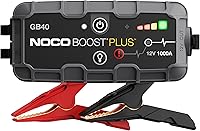
The NOCO Boost GB40 is a better fit for drivers who need coverage up to 6.0L gas or 3.0L diesel. Its power bank and flashlight add useful emergency functions, while drivers with larger engines should look for a unit rated for them.
For a larger gas or diesel engine, the Hulkman Alpha85 is rated up to 8.5L gas and 6.0L diesel. Its screen displays operating status, battery level, and possible errors; skip it if you prefer a lighter, simpler unit, since it weighs 4.5 lb.
If your main concern is carrying a unit in a small space, compare other portable jump starters for the glovebox. For a wider look at vehicle fit and features, see car jump starters: what to know before you buy.
What should you check before using a jump starter?
Before connecting it, confirm the unit is made for your vehicle's voltage and that its engine rating covers your engine and fuel type. Read the manual for the correct clamp order, starting steps, and removal instructions.
Inspect the cables and clamps for damage, and identify the positive and negative markings before bringing them near the battery. Park safely, switch off the vehicle, and keep the clamps from touching each other or metal parts they shouldn't contact.
If the starter has a screen or error indicators, check what they mean in its manual. A safety feature can help you spot a problem, but it doesn't replace correct connections or make an unsuitable unit safe to use.
How should you set up and care for a jump starter?
Charge the unit before an emergency and keep it charged on the schedule its manufacturer recommends. Storage needs differ by model, so follow its instructions for temperature and recharging rather than assuming one schedule fits every jump starter.
The Alpha85 maker recommends avoiding extreme temperatures and recharging at least every 3 months. For all models, store the clamps so they can't touch each other or damage the unit, and check the unit's charge before a long trip.
Keep the manual with the jump starter or save a copy where you can reach it. Knowing the clamp steps before the battery goes flat makes it easier to work carefully in poor light or roadside conditions.
What common jump starter mistakes should you avoid?
The most common mistakes are choosing a unit below your vehicle's rating, connecting clamps in the wrong order, and leaving the unit discharged in storage. Check the manual each time if you're unsure about the connection sequence.
Don't assume a bigger peak number solves every problem. A jump starter can't correct a faulty starter, damaged battery, or fuel problem, and repeated cranking can waste the unit's charge without helping.
Stop if the battery is swollen, leaking, cracked, or hot. If the vehicle still won't start after you follow the manual, get help instead of continuing to try.
Can a jump starter start a completely dead battery?
Some jump starters are designed to help with a battery that's very low, but no unit can make every dead battery usable. A battery with internal damage may need replacement, and another vehicle fault can prevent starting even when the battery has power.
The Alpha85 includes a Boost Start mode for a battery that is too low or dead, according to Hulkman. That feature doesn't repair a damaged battery or guarantee a start; see whether a jump starter can start a completely dead battery for more guidance.
What does a jump starter not do?
A jump starter isn't a battery charger, a replacement battery, or a tool for repairing a vehicle's electrical system. It provides power for an attempt to start the engine, but can't fix a worn battery, faulty starter, or engine problem.
If the car needs another jump soon after starting, have the battery and charging system checked. A portable unit is an emergency option, not a reason to ignore repeated failures.
Which jump starter should you choose?
Pick the GB20 for a compact unit for a smaller gas engine, the GB40 for a broader range that includes some diesel vehicles, or the Alpha85 for the largest stated engine range and a screen. Match your choice to your vehicle first, then decide whether extra size or features are useful.
A jump starter is worth keeping if you want a way to try starting your car without relying on another vehicle and will maintain its charge. For help weighing that tradeoff, read are jump starters worth it? alongside the broader car jump starter buying guide.
Frequently asked questions
What is a jump starter used for?
A jump starter supplies a brief burst of power to help start a vehicle with a weak 12V battery, without needing a second vehicle. Match its rated engine range to your vehicle and follow the unit's instructions for connecting and removing the clamps.
Can a jump starter start a completely dead battery?
Some models are designed to help with a battery that is very low, but results depend on the unit, battery condition, and vehicle. A jump starter can't fix internal battery damage or another fault that prevents the engine from starting.
Is a jump starter the same as a battery charger?
No. A jump starter provides a short burst of power to help crank an engine.
A battery charger is meant to recharge a vehicle battery over time.
Some jump starters can charge small electronics, but that doesn't make them a substitute for a vehicle battery charger.
Do you need a jump starter for your car?
You may want one if you drive alone, travel where roadside help can take time, or want an option that doesn't depend on another vehicle. It's optional if reliable help is close by, but any unit you keep should be charged and rated for your vehicle.