How Long Should You Leave a Jump Starter Connected?
Leave a jump starter connected only for the time its manual specifies. For how long to leave a jump starter connected, the practical rule is to follow the unit's starting sequence, then crank only as directed.
On this page (8 sections)
- How long to leave a jump starter connected before cranking
- Should the clamps stay attached while you start the car?
- How should you set up a jump starter?
- What should you do if the first attempt fails?
- Which jump starter should you choose for this job?
- What common mistakes should you avoid?
- How can you care for a jump starter between uses?
- What is the decision rule for connection time?
Leave a jump starter connected only as long as its instructions direct, then try starting the car. The answer to how long to leave a jump starter connected depends on the model: many provide a brief boost before cranking, rather than charging a dead battery over time.
There is no safe wait time that applies to every unit. Follow both the jump starter and vehicle manuals, since the correct connection, boost, cranking, and removal steps can differ.
A portable jump starter is for helping an engine turn over. It is not a substitute for a battery charger or maintainer.
If you need a step-by-step connection sequence, see our guide to how to use a car jump starter.
How long to leave a jump starter connected before cranking
Use the wait time in your jump starter's manual. Some models call for a brief connection before cranking; others use a boost button, indicators, or a different sequence.
If the manual does not give a wait time, don't leave the clamps attached while you guess. Contact the manufacturer for instructions.
Be especially cautious if the vehicle battery is damaged, leaking, swollen, or unusually hot.
Don't try to make a jump starter charge the battery by leaving it connected for minutes or hours. If the battery needs a full charge, use a suitable battery charger after the vehicle is safe to work on.
Should the clamps stay attached while you start the car?
Follow your model's instructions for whether the clamps stay connected during cranking. Some units are designed to remain attached while you try to start the engine; others require a boost mode or another step first.
Before cranking, turn off lights and accessories if the vehicle manual directs. Keep hands, clothing, and cables clear of belts, fans, and other moving parts.
If the engine starts, remove the clamps in the order shown in the manuals. Keep the clamps from touching each other or metal parts of the vehicle.
How long should you crank with a jump starter connected?
Crank only for the time allowed by the vehicle and jump starter instructions. Long or repeated cranking can overheat the starter or cables.
If the engine does not start, stop and check both manuals before trying again. Some units require a rest period between attempts or limit the boost sequence.
How should you set up a jump starter?
Park safely and confirm the connection steps before attaching the clamps. Use the jump starter only on a vehicle and battery type it supports, and follow the vehicle manual if it gives different instructions.
Switch off the vehicle and accessories as directed, then position the jump starter where its cables can reach without crossing moving parts. Identify the correct battery connection points before connecting anything.
If the battery is hard to reach or you cannot identify the proper points, get help rather than guessing.
Attach the clamps in the order specified for your vehicle and unit. Check the polarity and make sure each clamp is secure before activating a boost function.
Reverse-polarity protection or status indicators can help with setup, but they do not replace careful connections.
What should you do if the first attempt fails?
Stop and check the setup before making another attempt. Confirm that the clamps are on the correct connection points, the connections are secure, and the jump starter is ready according to its indicators and manual.
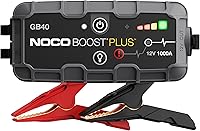
The GB40 suits a driver who wants a compact unit for a car or other supported 12V vehicle within its stated engine limits: up to 6.0L gasoline or 3.0L diesel. Its protection features may help make connection less error-prone, but someone with a larger engine should choose a unit rated for that vehicle instead.
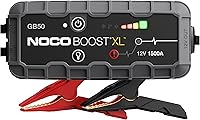
The GB70 is a better fit when the vehicle needs its higher stated engine limits, up to 8.0L gasoline or 6.0L diesel. Its larger size and weight may be unnecessary for a driver whose vehicle fits the GB40's range.
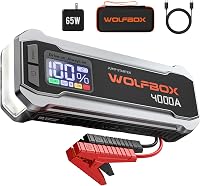
The WOLFBOX 4000A is for supported 12V vehicles with gasoline or diesel engines under 10L. Its display can make status easier to read, while its instructions specifically warn against reversing clamp polarity.
Skip it if your vehicle is outside those limits or you want a unit with a different connection process.
If a unit won't turn on or charge, read what to check when a jump starter won't charge or turn on. Stop if you notice heat, smoke, sparks, damaged cables, or battery leakage.
Which jump starter should you choose for this job?
Choose by vehicle compatibility, safe setup, and the features you'll use. Engine limits are a starting point for narrowing the options, but the manual still controls the connection and wait sequence.
The GB40 is the sensible choice for a smaller vehicle within its stated limits when compact storage matters. The GB70 suits drivers whose gasoline or diesel engine exceeds the GB40's limits but remains within the GB70's range.
For a supported vehicle under 10L, the WOLFBOX 4000A offers an LCD status display and one-touch boost function.
Think about who will use the unit and where it will live. A driver who wants fewer setup steps may value clear indicators and protection features, while someone comfortable following a manual may care more about vehicle fit and storage size.
For more help matching output to an engine, read what to look for in a jump starter.
What common mistakes should you avoid?
Don't use connection time as a way to compensate for a weak battery or poor setup. A longer wait does not turn a jump starter into a charger, and it may go against the unit's instructions.
Avoid these common errors:
- Leaving the unit connected overnight or while unattended.
- Guessing the clamp order or polarity.
- Cranking longer or more often than the manuals allow.
- Trying a vehicle that exceeds the jump starter's stated limits.
- Continuing when cables or clamps are hot, damaged, or sparking.
- Repeating failed starts without checking the setup or allowing a rest when required.
A deeply drained battery can also prevent some jump starters from detecting it. Our guide to whether a jump starter can start a completely dead battery explains when that may happen and when to stop.
How can you care for a jump starter between uses?
Keep the unit charged and ready according to its manual. Storage and recharge guidance vary, so use the instructions for your exact model.
After use, disconnect and store the clamps and cables as directed. Check the unit and cables for visible damage before putting them away, and recharge the jump starter as instructed so it is available for the next emergency.
Keep the manual with the unit or save a copy where you can find it. Knowing the boost, cranking, and disconnect steps before you are stranded makes it easier to follow them safely.
What is the decision rule for connection time?
For how long to leave a jump starter connected, follow the manual's stated wait and starting sequence, then disconnect it as directed. If the engine does not start within the allowed attempts, stop and check the setup instead of extending the connection time.
Choose the GB40 for a vehicle within its smaller stated engine range, the GB70 when you need its higher limits, or the WOLFBOX 4000A for a supported 12V vehicle under 10L. For the full roadside procedure, see how to jump-start a car without another car.
Frequently asked questions
How long should I leave a jump starter connected before starting?
Follow the jump starter's manual for the exact wait time and sequence. Portable jump starters generally provide a brief boost to help turn the engine over; they aren't meant to sit connected while they charge the vehicle battery.
Connect the clamps as directed, wait only as instructed, and try to start the vehicle.
Can I leave a jump starter connected overnight?
Don't leave a portable jump starter connected overnight unless its manual specifically says that use is safe. A jump starter is not usually a battery maintainer.
Disconnect it after the starting attempt and store it according to its instructions.
Should I disconnect the jump starter before cranking?
Some jump starters stay connected while you crank, while others require a boost button or a specific sequence. Follow the manual for your model, including any indicator or button steps.
Keep clear of moving parts and stop if the clamps, cables, or battery get hot.
What if the car won't start after using a jump starter?
Stop after the number of attempts allowed by the jump starter and vehicle manuals. Recheck the clamp positions and setup, then let the unit rest if instructed.
Repeated failed attempts may point to a battery or vehicle fault that needs professional help.