NOCO GBX155 vs GB150: Which Is Better? (October 2026)
Choose the NOCO GBX155 for larger engine ratings and a faster recharge, or the GB150 for its higher claimed starts per charge and IP65-rated housing. Both are 12V lithium jump starters with spark-proof and reverse-polarity protection.
On this page (8 sections)
- NOCO GBX155 vs GB150: what is the main difference?
- Which one fits your engine?
- Which model is easier to keep charged?
- Does the GB150's higher starts-per-charge claim matter?
- How do the size and housing compare?
- How should you set up and care for either jump starter?
- Where does the GBX75 fit in this comparison?
- Which NOCO should you choose?
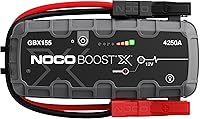
For noco gbx155 vs gb150, choose the GBX155 for a larger engine rating and faster USB-C recharge, or the GB150 for its higher claimed starts per charge. Both are portable 12V lithium jump starters with spark-proof connections and reverse-polarity protection, but they suit different use patterns.
The decision is less about which unit has the larger number in a single spec and more about what you need it to do. Match the engine rating first, then weigh recharge time, claimed starts between charges, housing and device charging.


NOCO GBX155 vs GB150: what is the main difference?
The GBX155 has more peak output and a higher stated engine range, while the GB150 has the higher claimed starts per charge. If both models fit your vehicle, the main choice is faster recharging versus a larger stated start count between charges.
The GBX155 is rated at 4,250A and the GB150 at 3,000A. Their engine ratings differ by 1.0L for both gas and diesel engines, with the GBX155 covering the larger range.
NOCO states up to 18 starts per charge for the GBX155 and up to 80 for the GB150. Treat those as stated maximums, not a promise that every vehicle or situation will produce the same result.
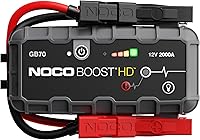
Our guide to the best NOCO jump starters by model compares these units with other options in the brand's range. For another Boost X matchup, see NOCO GB70 vs GBX75.
Which one fits your engine?
Use your vehicle's fuel type and engine displacement to check the stated range before choosing. The GB150 is rated for gas engines up to 9.0L and diesel engines up to 7.0L; the GBX155 extends those limits to 10.0L gas and 8.0L diesel.
That difference matters most when your engine falls above the GB150's limit but within the GBX155's. In that case, the GBX155 is the more suitable of these two models.
If your engine is within the GB150's range, the larger GBX155 rating may offer no practical advantage for your needs. If your engine exceeds both ratings, choose a jump starter with a suitable engine rating instead of assuming either model will cover it.
Is the GBX155 or GB150 right for a V8?
The noco gbx155 vs gb150 choice for a V8 depends on displacement and fuel type, not the V8 label alone. A V8 can fall within the GB150's range, while a larger engine may lead you to the GBX155.
Check your owner's manual or vehicle specifications for engine displacement. Then compare that figure with the limits above, using the correct gas or diesel rating.
For more context on how to compare engine size and starter capacity, read our guide to jump starters for V8 engines. A model's stated range is a useful first filter, but it cannot account for every battery condition or starting situation.
Which model is easier to keep charged?
The GBX155 is the better fit if you want a shorter stated recharge time and can use USB-C Power Delivery. It fully recharges in 2.7 hours, compared with 7 hours for the GB150.
The GBX155 also has a 60W USB-C Power Delivery port for input and output. NOCO says it can gain enough power for a jump start in 5 minutes, even from a completely depleted unit.
That quick-charge feature is useful when you discover the unit needs power shortly before a trip or roadside need. It does not replace regular checks: a jump starter that sits unused still needs attention so it is ready when you need it.
The GB150 is a better match if a longer recharge window fits your routine. Give it time to recharge after use rather than waiting until the next emergency to find out its charge level is low.
What can each model charge?
Both models can provide emergency power to personal devices, but the GBX155 gives a clearer option for higher-power USB-C charging. Its 60W two-way USB-C Power Delivery is described for phones, tablets, laptops and other USB-C devices.
The GB150 is described as a power bank for smartphones, tablets and more. Its output wattage isn't specified, so if charging a laptop is a priority, check that the power needs of your device match the GB150's output before relying on it.
Treat the power bank feature as a useful extra rather than the main reason to choose either jump starter. Engine fit and readiness should guide the purchase first.
Does the GB150's higher starts-per-charge claim matter?
It matters if you value a higher stated maximum between charges and your engine fits the GB150's range. NOCO's claimed maximum is up to 80 starts per charge for the GB150, compared with up to 18 for the GBX155.
The gap is worth noticing, but it doesn't measure starting strength by itself. The GBX155's higher peak output and larger engine rating serve a different priority, while its integrated 60-second timer is designed to conserve power from its high-voltage system.
Neither start count should be treated as a guarantee for your vehicle. How often you need to jump-start, the vehicle involved and the battery's condition can all shape how useful a claimed maximum is in your situation.
If a battery is completely dead, a jump starter may not solve every underlying problem. Our guide to whether a jump starter can start a completely dead battery explains what to consider before relying on one.
How do the size and housing compare?
The GBX155 is half a pound lighter, while the GB150 has a stated IP65-rated housing with rubberized over-molding. Their dimensions are close, so the housing and carry details matter more than a major size difference.
The GBX155 weighs 7 pounds and measures 8.18 x 4.84 x 13.51 inches. The GB150 weighs 7.5 pounds and measures 8.19 x 4.88 x 13.7 inches.
Choose the GB150 if its stated housing protection is a priority for how you store and carry the unit. Choose the GBX155 if you prefer the slightly lighter unit and want its UltraSafe 2.0 thermal efficiency and power management features.
Both models include heavy-duty clamps, a USB-C charging cable and a microfiber storage bag. Each also has a 500-lumen LED flashlight with 7 modes, including SOS and strobe.
How should you set up and care for either jump starter?
Read the unit's instructions, charge it before you need it and check the clamps before connecting them. Spark-proof and reverse-polarity protection are helpful safeguards, but correct setup still matters.
Before a trip, confirm the unit has charge and that the clamps and cable are with it. Store the jump starter and its accessories together so you can reach the instructions and cables without searching through the vehicle during a breakdown.
When you need a jump, park safely and follow the vehicle and jump starter instructions in order. Connect the clamps to the correct battery terminals as directed, keep the clamps from touching each other, and avoid working around moving parts.
After use, disconnect the clamps in the order stated in the manual and recharge the unit. If it fails to respond, pause and review the instructions instead of repeatedly reconnecting it or guessing at a different setup.
What mistakes should you avoid with the GBX155 and GB150?
Don't choose by peak output alone, ignore the engine rating or assume a partly charged unit is ready. Those shortcuts can leave you with a model or charge level that doesn't suit the situation.
A larger peak-amp figure doesn't replace checking the gas or diesel engine limit. Use the vehicle's actual displacement rather than relying on a broad label such as truck, SUV or V8.
Another common mistake is buying the GBX155 for fast charging but using a low-power charger and expecting its stated USB-C Power Delivery recharge time. Use the right charging equipment for the claimed recharge rate, and allow more time if you don't have it.
Finally, don't read the claimed starts per charge as a guarantee. Keep a routine for checking charge, and don't store the unit away after a jump without replenishing it.
Where does the GBX75 fit in this comparison?
Consider the GBX75 if carrying less weight matters more than matching the GBX155 or GB150's higher engine ratings. It weighs 5 pounds and is rated for gas engines up to 8.5L and diesel engines up to 6.5L.
Its 2,500A peak output is lower than either model in the main comparison. It has 60W USB-C Power Delivery, can gain enough charge for a jump start in 5 minutes, and fully recharges in 1.8 hours with a 60W charger.
The GBX75 claims up to 12 starts per charge and has a 400-lumen flashlight. Its lower rating makes it a more relevant option for vehicles within its range than for a buyer who needs the GBX155's larger engine rating.
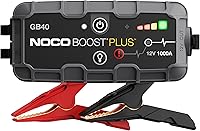
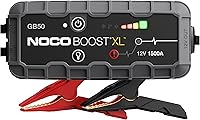
If you are considering smaller NOCO options, compare the GB40 and GB50 matchup as well. The NOCO GBX155 review provides a closer look at the larger model's features.
Which NOCO should you choose?
Choose the GBX155 if your engine needs its higher stated range or quick USB-C recharging is a priority. Choose the GB150 if your engine fits its rating and its higher claimed starts per charge or IP65-rated housing better matches your routine.
Skip the GBX155 if you don't need its higher engine rating or charging features and would rather prioritize the GB150's stated starts-per-charge maximum. Skip the GB150 if your engine exceeds its range or a 7-hour recharge window doesn't fit how you keep emergency gear ready.
For the noco gbx155 vs gb150 decision, check engine displacement first, then pick the recharge and housing features you'll use. If neither engine rating fits your vehicle, move to a model with a suitable range rather than stretching either one beyond its stated limit.
Frequently asked questions
Is the NOCO GBX155 better than the GB150?
The GBX155 is the stronger choice when your engine needs its higher rating or you value fast USB-C recharging. The GB150 is a better fit if its engine rating covers your vehicle and you value its higher claimed starts per charge or IP65-rated housing.
Choose by your vehicle and charging routine.
How many times can the GBX155 and GB150 jump-start a vehicle?
NOCO states up to 18 jump starts per charge for the GBX155 and up to 80 for the GB150. These are maximum claims, not guaranteed totals.
Vehicle, battery and conditions can affect results, so keep the unit charged and follow its instructions.
How long does it take to charge the GBX155 and GB150?
The GBX155 fully recharges in 2.7 hours with USB-C Power Delivery, and NOCO says it can gain enough charge for a jump start in 5 minutes. The GB150's stated recharge time is 7 hours.
Plan to recharge the unit after use so it's ready for the next need.
Which NOCO model is lighter, the GBX155 or GB150?
The GBX155 weighs 7 pounds and the GB150 weighs 7.5 pounds, a half-pound difference. If carry weight matters more than either model's higher engine rating, the GBX75 weighs 5 pounds and has a lower stated engine fit.