How Long Do NOCO Jump Starters Last?
A NOCO jump starter usually stays useful for several years. Its lithium battery holds a charge best when you top it up every 3 to 6 months and keep it out of hot cars, and its starting power fades gradually before the pack stops working.
On this page (9 sections)
- How long do NOCO jump starters last in normal use?
- What shortens a NOCO jump starter's life?
- How often should you recharge a NOCO jump starter?
- Does jump starting often wear a NOCO pack out faster?
- How should you store a NOCO jump starter so it lasts?
- What are the signs a NOCO jump starter is near the end?
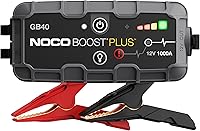
- How does the GB40 compare to the GB20 and the Hulkman Alpha85 for longevity?
- How long should you leave a jump starter connected?
- Bottom line on NOCO jump starter lifespan
A NOCO jump starter usually stays useful for several years. Its lithium battery holds a charge best when you top it up every 3 to 6 months and keep it out of hot cars, and its starting power fades gradually before the pack stops working.
The honest answer to how long do NOCO jump starters last is that no single number fits every pack. Use, storage temperature and charging habits decide most of it, so a pack kept cool and topped up outlasts one left in a trunk through summer heat.
How long do NOCO jump starters last in normal use?
Expect roughly 3 to 5 years of dependable service from a Boost pack that's charged on schedule and stored indoors. The lithium cells inside lose capacity slowly with every cycle, so the pack still starts a car after year five but with less reserve.
Starting a dead battery asks for a large burst of current. A pack that's topped up often has more of that burst in reserve, while one left flat for months works harder each time you press the button.
Cold weather shortens the gap. A pack that starts a 6.0L gas engine easily in July may hesitate in January, and the same pack recovers once it's warmed up.
The GB40 and GB20 both carry a 1-year limited warranty. That window covers defects, not the natural fade that comes from years of use, so treat the warranty as a safety net rather than a lifespan figure.
What shortens a NOCO jump starter's life?
Heat is the biggest killer, followed by long storage at low charge. A pack left on a dashboard in summer or in a hot garage ages faster than one kept in a cool closet, and a flat lithium battery that sits for months can lose the ability to hold charge at all.
Other habits that wear a pack down faster:
- Storing it flat for long stretches instead of topping it up
- Leaving it on the charger for weeks
- Repeatedly jump starting engines above its rating, which pushes the cells harder
- Dropping it or letting water into the housing
The GB40 is rated for gasoline engines up to 6.0 liters and diesel up to 3.0 liters. Using it on a bigger engine than that works against the pack over time.
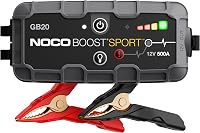
The GB20 has a lower ceiling, at 4.0L gas. Its needle-nosed clamps and 7-inch cable suit tight spaces, but the smaller amp rating means it shouldn't be pushed onto a big V8 or a diesel.
Staying within the engine rating is one of the easiest ways to get more years from either pack.
How often should you recharge a NOCO jump starter?
Recharge to full every 3 to 6 months, or sooner if the charge indicator drops. A full charge takes about 3 hours on the GB40 and GB20, so it's a quick job you can do on a Sunday afternoon.
Set a reminder for the start of each season. Spring and fall top-ups cover the two times a year when a jump starter most often sits untouched, and a pack that's charged before winter starts cold weather with full reserve.
Don't wait for the pack to feel dead before charging it. A pack that sits flat for months is the one most likely to fail when you need it.
The GB40 recharges by USB-C and doubles as a power bank, so you can top it up from a car charger on a longer drive.
How do you tell the pack is actually full?
A 3-hour charge fills the GB40 or GB20, and NOCO rates each at up to 20 starts per charge when it's full. If the pack runs out of starts far sooner than that, it isn't holding a full charge.
If a pack stops delivering close to its rated starts after a 3-hour charge, it isn't taking a full charge and needs another session or a replacement.
Does jump starting often wear a NOCO pack out faster?
Yes, each jump start uses a meaningful slice of the pack's charge, and frequent starts add up over the years. The GB40 is rated for up to 20 starts per charge, so a pack used weekly will cycle far more than one used twice a year.
The type of start matters too. A healthy battery that's simply flat asks for a short burst, while a deeply discharged battery in cold weather asks for more.
Repeatedly jump starting a car with a failing battery or a bad alternator pushes the pack harder than occasional use.
If you jump start often, recharge after each session rather than waiting for the next scheduled top-up. That keeps the pack from sitting partly drained.
The GB20 shares the same 20-starts-per-charge figure on 4.0L gas engines. On a smaller engine, each start draws less from the pack, so the same charge goes further in practice.
How should you store a NOCO jump starter so it lasts?
Keep it cool, dry and partly to fully charged, ideally between 50°F and 80°F (10°C and 27°C). The GB40 and GB20 are IP65-rated, so dust and splashes aren't the concern.
Temperature is.
Good spots include a climate-controlled garage shelf, a hall closet or a cabin that doesn't bake in the sun. Skip the dashboard, the trunk floor in summer and any spot next to a heater or furnace.
A pack stored in a freezing car over winter is fine short-term, but bring it inside to warm up before you use it. Charging a cold lithium pack isn't advised, so let it reach room temperature first.
The GB40 weighs 2.4 pounds and the GB20 weighs 16 ounces, so either one is light enough to carry inside when the weather turns. That short trip is the simplest storage habit you can build.
What are the signs a NOCO jump starter is near the end?
Watch for slow charging, fast charge loss and failed starts on healthy batteries. These signs show up before the pack quits completely, so you have time to replace it.
- The charge falls quickly after a full top-up
- Charging takes much longer than the rated 3 hours
- The pack needs several attempts to start an engine that cranks fine on its own battery
- The housing feels hot during charging or use
- The clamps or cable show damage
A pack that fails in cold weather but works when warm is on its way out. Recharge it and try again in milder conditions before you decide.
If your jump starter is a different brand or a plain battery pack, the same signs apply. Our guide to how long do battery jump starters last covers the general lifespan rules across brands.
How does the GB40 compare to the GB20 and the Hulkman Alpha85 for longevity?
The GB40 is the best pick for most people because its 1000 amps cover a wide range of engines without pushing the cells to their limit. The GB20's 500 amps suit smaller cars, and the Hulkman Alpha85's 2000 amps and smart display fit heavy-duty use.
The Hulkman's screen shows battery level and error codes, so you can spot a weakening pack earlier than with a simple light indicator. Its 10-layer protection covers spark-proof and reverse-polarity protection, which helps prevent the kind of mistake that can damage a pack.
How does charge speed affect how often you top up?
The Alpha85's 65W Speed Charge tech goes from 0% to 80% in about an hour and reaches full in roughly 90 minutes. That makes a quarterly top-up a very short job, and a 5-minute charge is enough for one emergency start.
Faster charging means fewer excuses to skip the schedule, which is the habit that matters most for any pack's lifespan.
Match the pack to your engine rather than buying the biggest one. A 2000-amp pack used only on a small hatchback cycles less often per start, but it costs more and takes up more room.
Compare the full lineup in our guide to the best NOCO jump starters by model.
How long should you leave a jump starter connected?
Leave the clamps on only long enough to start the engine, usually a few seconds of cranking. Once the engine runs, remove the clamps in the reverse order you attached them.
Our guide to how long to leave a jump starter connected explains the sequence step by step.
Leaving a pack connected to a running vehicle doesn't charge it and doesn't help the car's battery. The pack's job ends when the engine catches, so disconnect and let the alternator take over.
If the engine won't start after two or three tries, stop and check the connections. Cranking a dead battery repeatedly drains the pack and adds heat, both of which shorten its life.
The GB40's reverse polarity protection means a wrong connection won't spark or fry the pack, but it also won't start the car, so check the clamps before you try again.
Bottom line on NOCO jump starter lifespan
A NOCO jump starter lasts several years when you recharge it every 3 to 6 months, store it cool and keep it within its engine rating. The GB40 is the best pick for most drivers, while the GB20 suits smaller cars and the Hulkman Alpha85 fits heavy-duty needs.
Treat the pack as a wear item. Top it up on a schedule, watch for slow charging and failed starts, and replace it when it stops holding a useful charge.
That routine answers how long do noco jump starters last for your own pack far better than any single number.
New to these devices? Start with what is a jump starter and how it differs from jumper cables, then choose a pack that matches your engine.
Frequently asked questions
Can a NOCO jump starter be repaired or have its battery replaced?
NOCO's Boost packs have sealed lithium cells inside the housing. The practical answer is that the pack is a wear item: when it no longer holds charge or delivers a start, plan to replace it.
Does the 1-year warranty cover a worn-out battery?
A worn battery from normal use isn't the same as a defect. NOCO's 1-year limited warranty on the Boost line covers manufacturing problems, so keep your receipt.
A pack that dies years later is usually outside that window.
Should I leave a NOCO jump starter plugged in all the time?
No. Charge it to full, then unplug it.
Leaving a lithium pack on the charger for months doesn't extend its life and can add heat.
A top-up every 3 to 6 months is enough to keep it ready, so periodic recharging beats constant charging.
How do I know my NOCO jump starter is getting weak?
The pack takes longer to reach full charge, the charge lights drop quickly after a top-up, or it needs repeated button presses to start a healthy engine. A weak pack also struggles in cold weather first.
Any of those signs means it's time to recharge or replace.