AstroAI S8 Car Battery Jump Starter Review: Worth It? (November 2026)
The AstroAI S8 is a solid pick for a compact car or light truck because its 3000A peak rating and boost mode cover 6.0 L gas and 3.0 L diesel engines in a 0.95 lb pack. Pick the NOCO GB40 instead for spark-proof clamps and a weather-sealed case, and the GB70 for engines over 6.0 L.
On this page (8 sections)
The AstroAI S8 is a sensible pick for a compact car or light truck, thanks to its 3000A peak rating, boost mode and 0.95 lb body. This AstroAI S8 car battery jump starter review weighs those specs against two NOCO models that add spark-proof clamps and longer buyer track records.
It starts 6.0 L gas and 3.0 L diesel engines, which covers most sedans, crossovers and half-ton pickups. The real question is whether its lighter build and 2-year warranty beat what the NOCO line offers.
The AstroAI S8 at a glance
The S8 is a compact lithium jump pack built for everyday dead-battery starts. AstroAI rates it at 3000A peak and 6.0 L gas or 3.0 L diesel, and it weighs under a pound.
AstroAI S8: Best for small cars and light vans

- 3000A peak current
- 6.0 L gas and 3.0 L diesel engines
- 8 integrated protections
- 0.95 lb, 8000 mAh lithium ion
A light, compact pack with a boost button for drained batteries and eight built-in protections. It covers the engine sizes most drivers actually own.
Pros
- Boost mode for batteries under 9 V
- 8 protections including reverse polarity
- Light enough to store in a travel bag
- 2-year manufacturer warranty
Cons
- Needs a long first charge
- Rated below the NOCO GB70 for big engines
- Cold weather hurts lithium performance
That weight is the headline. A pack you can drop in a glove box or travel bag is one you'll actually keep in the car, which matters more than a higher rating you leave in the garage.
The specs in one place
- Peak current: 3000A in the marketing copy and 1500A in the spec table. That gap is worth noting, since peak and continuous current are different measures.
- Engine rating: 6.0 L gas and 3.0 L diesel.
- Battery: 8000 mAh lithium ion, with a 45C high-rate cell.
- Weight and size: 0.95 lb, about 7.9 x 4.5 x 3.7 in.
- Protections: 8 built-in, including reverse polarity, overcurrent, overcharge and short circuit.
- Warranty: 2 years from AstroAI.
- Extras: boost mode, three-mode flashlight and power bank function.
Who the AstroAI S8 suits
Buy the S8 if you drive a sedan, crossover, small SUV or light pickup and want a pack that lives in the car without taking up space. It fits the driver who wants a boost button for a battery that has drained flat, not just a slow crank.
It also suits someone who wants a longer warranty than the NOCO line offers. AstroAI backs the S8 for 2 years, double the 1-year coverage on the GB40 and GB70.
The engine rating is the clearest dividing line. A 6.0 L gas or 3.0 L diesel ceiling covers the four- and six-cylinder engines in most family vehicles, plus the V8 in a half-ton pickup.
It also covers the smaller 12 V machines AstroAI lists: motorcycles, ATVs and lawnmowers. That breadth matters if the same pack has to serve a car and a ride-on mower.
Skip it if you own a heavy-duty truck, a large diesel or a motorhome. Those engines sit above its 6.0 L gas and 3.0 L diesel rating, and the NOCO GB70 is the better fit there.
Skip it too if you want the longest track record in the category, since the NOCO models have far more units in service.
The specs that matter in daily use
Three numbers decide how the S8 behaves day to day: the 3000A peak rating, the boost threshold and the weight. Each one changes whether the pack gets used or forgotten.
The 3000A peak figure is the surge the pack sends at the moment of a start. AstroAI pairs it with a 45C high-rate lithium cell, which is designed to release that surge quickly rather than trickle it out.
For a four-cylinder or V6, that is more than the engine asks for.
Boost mode is the feature that sets the S8 apart at this price. When you connect the clamps and the battery reads below 9 V, a green indicator flashes and the BOOST button becomes active.
Press it and the pack sends a stronger surge to a battery that a normal start would not turn over. That covers the case where you left the lights on overnight and the battery is fully flat.
Weight is the quiet spec. At 0.95 lb the S8 is light enough to sit in a glove box or door pocket without sagging the hinge.
AstroAI also builds in metal clamps and smart jumper cables, which it says protect the pack from heat damage and loose ports. Those are the failure points on cheap packs, where a loose port or a bulging cell ends the pack's life early.
The 430 g figure in the spec table confirms the sub-pound claim, so the S8 is much lighter than the 2.4 lb NOCO GB40 and the 5.0 lb GB70.
How to set up the AstroAI S8
Charge the S8 fully before its first trip, then connect the clamps to the battery terminals and check the indicator before you try a start. The order matters for the protections to work as designed.
Charge it for at least a few hours the first time. AstroAI notes the pack discharges while it sits in storage, so the first charge takes longer than later top-ups.
Plug it in with the included cable and leave it until the indicator shows a full charge.
When you need it, clamp red to positive and black to negative. The S8 checks polarity and voltage.
If the clamps are reversed, its protections stop the circuit rather than let it spark.
Watch the indicator. A green flash means the battery is under 9 V, and the BOOST button is ready.
Press it only for that flat battery, then start the engine as normal.
Remove the clamps once the engine runs. Recharge the S8 within a few hours of use so it's ready for the next start.
Charging and care between trips
Recharge the S8 within 3 months even when you haven't used it. AstroAI rates the standby time at up to 18 months, but it recommends a 3-month charge cycle to keep the lithium battery healthy.
That advice matters more than the headline 18-month figure. A pack that sits untouched in a trunk for a year loses capacity, and a low pack may not deliver its 3000A peak when you need it most.
The 8000 mAh cell is small next to a lead-acid jump box, so every bit of stored charge counts on a cold morning.
Set a calendar reminder for the first of every third month. Bring the pack inside, charge it to full, and put it back.
The whole job takes an hour or two.
Store it away from direct sun and heat. High temperatures age lithium cells faster than cold, so a shaded spot in the cabin beats a dashboard in summer.
Check the clamps and cable for fraying each time you recharge. A damaged cable is a safety issue, and AstroAI's protections assume the cable is intact.
Wipe the clamp jaws clean so they make solid contact. The built-in cable design means there is no separate lead to lose, but it also means a worn cable cannot be swapped out on its own.
Where the AstroAI S8 falls short
The S8's weak points are real: its first charge is slow, its engine ceiling is modest and cold weather cuts its output. None is a dealbreaker for a small-car owner, but each matters in the right situation.
The first charge is the most common surprise. Because the pack drains in storage before it reaches you, the initial top-up can take several hours.
Plan for that before a road trip rather than the night before.
Cold is the bigger limitation. AstroAI says the battery may not perform well in extreme cold and advises keeping the pack warm before use.
A lithium pack left in a freezing trunk loses surge capacity, so bring the S8 into the cabin in winter.
The engine ceiling rules out heavy-duty work. At 6.0 L gas and 3.0 L diesel, the S8 covers most family vehicles but not a large diesel truck or a motorhome.
The NOCO GB70 goes to 8.0 L gas and 6.0 L diesel for those.
Finally, the peak figure needs a plain reading. The title says 3000A peak while the spec table lists 1500A amperage.
Treat 3000A as the short surge and 1500A as the working figure, and size the pack by its engine rating rather than the larger number.
Alternatives to the AstroAI S8
The S8 is not the only sensible choice at this size. Two NOCO packs and the Gooloo line each fit a different buyer, and the right one depends on your engine and how much you want to spend.
NOCO Boost GB40: the safer first buy
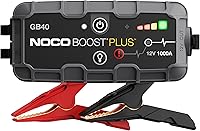
The GB40 carries a 9.3 score, the highest here. Its 1000A peak starts 6.0 L gas and 3.0 L diesel engines, up to 20 starts per charge.
The UltraSafe clamps are spark-proof and reverse-polarity protected, so a wrong connection won't spark. That matters for a first-time buyer who has never jumped a car before.
It also has an IP65 housing that resists water, dust and impact, plus a 100-lumen light and USB-C power bank. At 2.4 lb it's heavier than the S8 but still glove-box size.
The trade-off is a 1-year warranty against AstroAI's 2 years. For a first-time buyer who wants the least fuss, the GB40 is the pick.
See how it stacks up in our rated jump starter roundup.
NOCO Boost GB70: for bigger engines
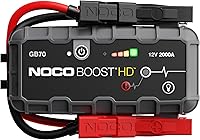
The GB70 scores 8.8 and covers what the S8 can't. Its 2000A peak is rated to 8.0 L gas and 6.0 L diesel, with up to 40 starts per charge.
It keeps the spark-proof clamps and IP65 housing, and adds a 400-lumen light. It also ships with an XGC cable and connectors for hardwiring a permanent connection.
At 5.0 lb it's the heaviest of the three, which makes it a better fit for a truck bed box than a glove box. If your engine is over 6.0 L gas or 3.0 L diesel, this is the pack to buy.
Gooloo: the budget-friendly family
The Gooloo jump starter line is worth a look if you want a low-cost backup for a second car. Our Gooloo GT4000S review covers its bigger sibling, which suits drivers who want more headroom than the S8 offers.
Compare options in our guide to the car battery jump starter for the money if budget is the deciding factor.
Verdict: should you buy the AstroAI S8?
Buy the AstroAI S8 if you drive a compact car, SUV or light truck and want a light pack with a boost button for flat batteries. Its 3000A peak rating, eight protections and 2-year warranty fit the everyday dead-battery job, and 0.95 lb means it stays in the car.
Pick the NOCO GB40 instead if you want spark-proof clamps, an IP65 case and the strongest overall package for a small engine. Pick the GB70 if your engine runs above 6.0 L gas or 3.0 L diesel.
The S8 sits in the middle: more boost than the GB40 on paper, less engine headroom than the GB70, and the longest warranty of the three.
Our score weighs specs, features and buyer feedback against what you're shopping for. For most small-car owners, this AstroAI S8 car battery jump starter review lands on a buy, with the NOCO GB40 as the safer first choice.
Frequently asked questions
Is the AstroAI S8 worth buying?
It is for a compact car, SUV or light truck up to 6.0 L gas or 3.0 L diesel. The 3000A peak rating, boost button and eight protections cover everyday dead-battery starts in a 0.95 lb pack.
Pick a NOCO if you want spark-proof clamps or a bigger engine rating.
What engines can the AstroAI S8 start?
AstroAI rates it for 6.0 L gas and 3.0 L diesel engines, plus 12 V motorcycles, cars, SUVs, pickups and lawnmowers. That covers most sedans, crossovers and half-ton trucks.
If your engine is larger, the NOCO GB70 is rated to 8.0 L gas and 6.0 L diesel.
How long does the AstroAI S8 hold a charge?
AstroAI says the standby time tops out at 18 months and recommends charging it within 3 months to keep the battery healthy. The first charge can take a few hours because the pack discharges while it sits in storage.
Recharge it on a calendar reminder rather than waiting for a dead start.
Why won't the AstroAI S8 start a truck in winter?
Lithium batteries lose performance in extreme cold. AstroAI advises keeping the S8 in a warmer place before you use it, such as inside the cabin rather than the trunk.
A warmed pack delivers closer to its rated 3000A peak when the engine is cold.
How does the boost button work on the AstroAI S8?
The S8 checks battery voltage when you connect the clamps. Below 9 V, a green indicator flashes and the BOOST button becomes active.
Press it to send a stronger surge to a fully drained battery that a normal start would not turn over.
What is the warranty on the AstroAI S8?
AstroAI backs the S8 with a 2-year manufacturer warranty. That is longer than the 1-year coverage NOCO gives the GB40 and GB70.
Keep your order details and the model number, and contact AstroAI support in California if a fault appears.